How To Improve Body Image
How do I treat body image issues? It’s often the last thing to improve in eating disorder recovery, and one of the most difficult things to treat. In this article I will explore what body image is and how you can take simple steps towards improving yours. I also discuss my own history with body image and the way my journey informs my work with clients.
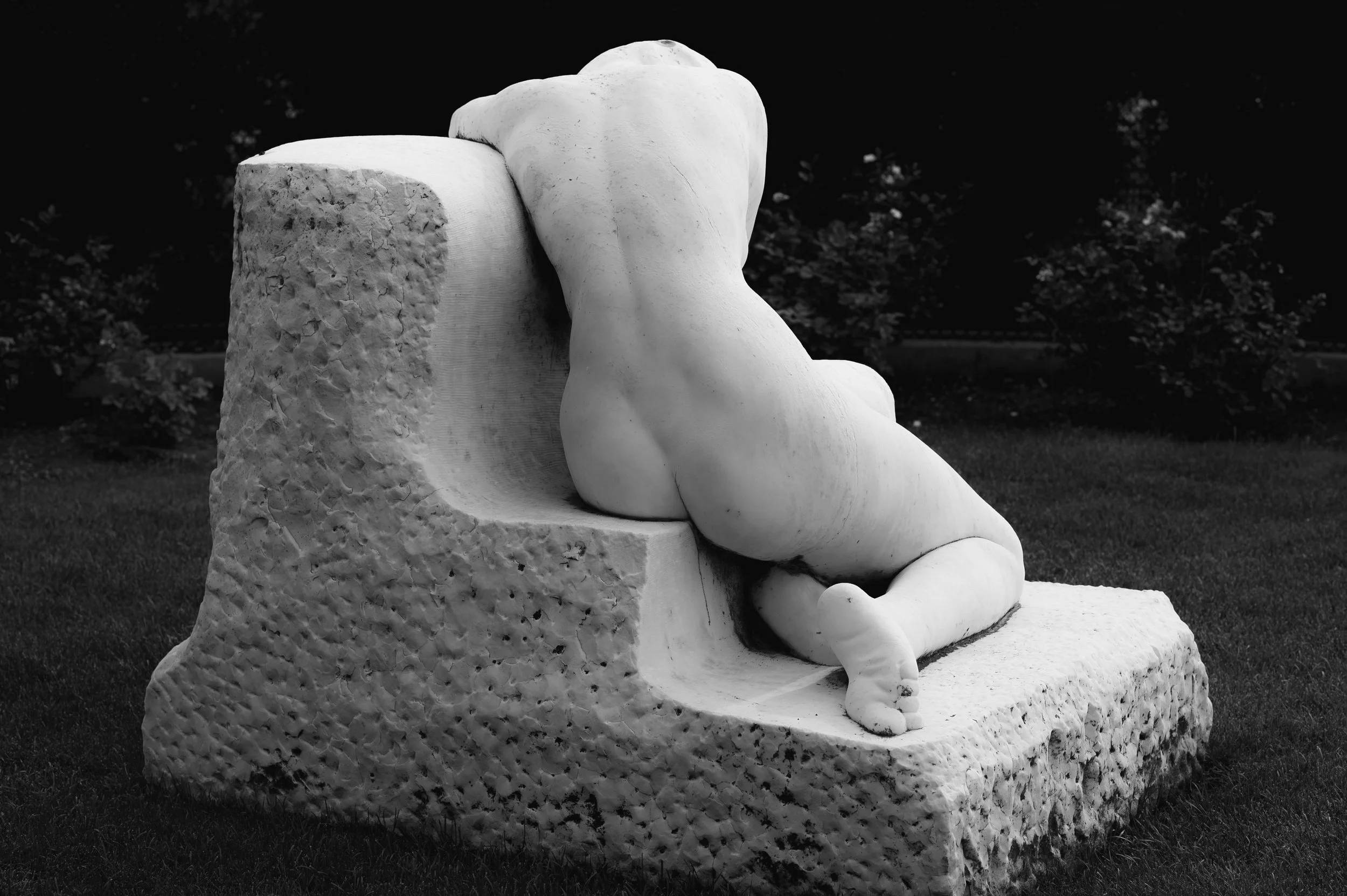
Body image isn’t based on objective reality.
It’s about how your brain senses and experiences your body, and the image those sensations create. If it sounds pretty enigmatic- that’s because it is!
What Body Image Actually Is
Body image is the felt-sense, the mental representation of our bodies held in our minds. This has very little to do with external reality. Often when I’m treating someone for an eating disorder, their body image is horrible at the start. They don’t want to think about their bodies- or their bodies are all they can think about as they check, pinch, measure, evaluate and try to figure out if their bodies are repulsive or beautiful, adequate or shameful.
Research on interoception (your ability to sense what’s happening inside your body) shows body image is directly influenced by internal bodily signals and emotional states. Pain and pleasure change body image. That’s why body image can fluctuate so wildly, even when the body does not.
When you imagine your body, you are not seeing it objectively. The more you struggle with an eating disorder, the more I can assure you that you are not seeing yourself accurately. It’s a difficult thing to comprehend when you see the rest of the world pretty darn accurately! How can this one image in the mirror and in your mind— yourself— literally you— be so distorted while the rest of reality remains intact?
One explanation centers around how pain influences self perception. When people are in pain, their body image is actually worse.
What does that mean? That means that when you close your eyes and imagine your body, you are actually crafting an image that represents how your body feels, versus remembering factual data from when you last saw your own reflection (Craig, 2002).
The brain processes emotional pain in many of the same regions as physical pain (Eisenberger et al., 2003). This is why body image can become significantly worse when you’re struggling with a mental health condition. The feelings of shame, rejection, low self esteem and insecurity manifest as signals of emotional pain, which directly impacts your felt sense of your own body.
Why Does Body Image Feel So Intense?
To understand the origins of body image, we have to go waaay back. No, further back. Yep, even further. Back to the very first day of your life. Actually back to your time in utero. Your brain learns that your body exists through experiences and sensation. When you are born, you don’t know that you have a separate body than your primary caregiver (Stern, 1985).
Babies are so cute and amazing and bizarre aren’t they?
You don’t know that your arms are your arms. You don’t know that your primary care givers body, usually your mother’s body, is separate and different than yours. You learn this through experience. You learn this through having your needs met or frustrated. But at the beginning of life, you don’t understand what exists inside versus outside of your body. You don’t know what is you and what is your environment. Every sensation you experience gets translated into the very beginnings of a self concept.
(Side note because I can’t resist: this is actually the definition of psychosis; not being able to tell what is internally generated versus externally real in the environment i.e. hearing a voice and thinking it is from outside of you when really it originated in your mind. Being a baby is freakin’ scary when you think about it that way! But I digress… back to body image.)
Eventually the brain begins to consolidate “me” and “not me” into separate categories. The sense of separateness from the world, from the mother, begin to form. Until then, when you feel good and safe and comfortable, the world is good. There is no difference between you and the external world so pleasure fully colors your perception— and so does pain. Your internal sensations, colored by how other people care for and treat your body, creates an internal mental representation of the world and your own body.
Body image starts this young. The felt sense of comfort or danger that comes from having your needs met or frustrated, this is what creates the earliest sense of our bodies and our internal image of them. Over time, your felt sense of your body takes on an emotional tone that you carry with you into your early childhood years and beyond. By the time you encounter the media and beauty standards, your body image has been quietly forming in the background of your mind. If it already has a negative tone, the media is perfectly poised to amplify it, fanning the flames of your discontent and capitalizing on the insecurity.
Why Trying to Fix Your Body Doesn’t Fix Body Image
Fixing the external body does very little for the inner, felt sense of your body. Often, the quest to fix your body creates the experience of more stress, more constriction, more fear, more tightness, more deprivation— all negative experiences that actually make body image worse. I can’t tell you how many clients have lamented to me in horror— at their lowest weights, in the peak of their eating disorders— that their body image was worse than it had ever been before they got so sick.
Feelings of pleasure, relaxation, expansion and freedom are the experiences that improve body image. Feeling strong, feeling powerful, feeling embodied— these are the experiences that generate a positive body image.
Even painful emotions such as grief and anger, when experienced fully and safely, improve body image because the body is allowed to fully exist, without having to limit or distract from it’s own experience. Allowing all emotions, and having safe emotional connections with others that allow those emotions to be experienced without overwhelm, improves body image (Lavender et al. 2015).
The only exception for this is in the case of gender dysphoria.
With a typical eating disorder, changing the body only makes body image distress worse. Losing weight leads to a greater preoccupation with fat on the body. Changing a perceived flaw does nothing to change the internal felt sense of the body, so the body image distress has nothing left to do but find a new alibi, a new flaw to fix, to continue the narrative that once that flaw is fixed, all will be well. This is an endless, insatiable cycle, that can only be interrupted by halting efforts to change the body.
This is true unless body image distress centers around gender dysphoria. When gender dysphoria underlies body image distress, altering the body is not an insatiable longing. Changing the physical appearance to align more closely with the persons internal sense of their gender actually leads to long lasting, measurable relief from body image distress (van de Grift et al., 2017). Eating disorders occur in very high rates in the trans and non binary populations, which makes seeking care from a gender affirming eating disorder professional essential for helping the person tease out what is gender identity related distress, and what is the eating disorder (Diemer et al., 2015).
How to Actually Improve Body Image
Body image can be improved by focusing on how your body feels, and letting yourself fully experience whatever arises when you turn your attention inward.
But how can you do this if you hate your body?
How can you tolerate being in your body more if you hate it and just want to escape it?
Here are a couple of strategies:
1) Practice Body Neutrality
You can start by treating it neutrally. That means treating it with the basic respect you would give any other living organism. If you want to keep a plant alive, you give it enough water and sunshine— no matter how you feel about the plants aesthetic value. If you want to keep your body alive, you need to give it enough water and food— no matter how you feel about your bodies aesthetic appeal.
So just start there. Feed your body at regular intervals. Notice when you are thirsty. Drink water. Tap into your internal sense of your body and try to keep it as comfortable as you can. This is the first step in having a body that feels more comfortable, and in turn rewards you with pleasurable signals that your brain will use to subtly shift your body image in a positive direction.
2) Notice Your Triggers
Notice when your body image is worse. Notice when the shift happens. Try to slow down and look at what happened immediately before that shift took place. Did something happen that hurt your feelings? Did you feel rejected, angry, undervalued, invisible? Did you feel like you couldn’t assert yourself? Did you feel like you couldn’t connect with someone you care about? Did you feel like your needs didn’t matter or weren’t seen? Did anything happen that made you feel uncomfortable emotionally?
Give yourself the benefit of the doubt that you feel bad for a reason. Your brain is used to blaming your body for the bad feeling, as this is it’s habit. Notice that tendency and get curious— if your body isn’t the problem, what else could be making you feel so uncomfortable? Let yourself ponder the question. You don’t need an immediate answer. Starting a dialogue with yourself and understanding that there is always something deeper going on is a good first step. Having a trusted guide, like an eating disorder therapist, can help you explore this further.
My Experience with Body Image
I recovered from an eating disorder many years ago and have come to see body image distress as my own personal emotional smoke alarm. Body image preoccupation and distress used to be a constant, never ending loop in the back of my mind. Now having negative, preoccupied thoughts about my body is rare enough that when it happens, I take it as an alert that something is wrong emotionally.
The shift into negative body image is usually sudden, which shows me that there is no way my physical body has actually changed— something else inside of me has shifted instead. I use this as an opportunity to tap into what is going on for me under the surface emotionally. I have found that 10/10 times, something upset me and I was trying to deny, suppress or avoid it. Perhaps I was feeling isolated, lonely or angry. Perhaps I was avoiding grief, hurt feelings, physical pain. Like a smoke alarm going off, body image distress lets me know something is wrong, gets me to slow down and ask myself, what’s really going on? What do I really need? Why do I feel so bad right now?
When my eating disorder was at it’s worst, my body image was atrocious. Looking in the mirror would cause panic and despair; I was that horrified by what I saw in the mirror. In retrospect, I understand now that those years of my life were full of incredible emotional pain. But I was not ready to fully experience the rage and grief that would have been a healthy, natural response to my situation— so my mind found a way to unconsciously turn those feelings on my own body to regain a semblance of control and make the pain something I could fix by trying to fix my body.
Therapy helped me get those feelings off of my body and put them back on the people and situations they belonged to. As I nourished my body adequately and focused on how I felt inside over what I looked like on the outside, my body image shifted into something more neutral, then slowly into something positive. I gained weight and found to my absolute astonishment that I really did feel better about my body when I wasn’t so sick with an eating disorder.
But it wasn’t until after having a baby that my body became a place that felt consistently beautiful in my minds eye. This is counter to the narrative I often hear; that mom’s don’t like their bodies, or feel ashamed of the changes they’ve undergone. For me, the love I feel for what my body has done for me, allowing me to create life, has colored what I see in the mirror ever since. According to beauty standards, my body looks “worse” than it did before I had a baby. But my body image has never been better.
I know I wont be spared from aging, illness, my bodies limitations and eventual decline. I am sure diminished physical abilities, perhaps even chronic pain (who as a senior doesn’t have a few aches and pains after all?) will shake the steady foundation I have built. My hope is that by continuing to let myself feel all of my feelings— the good, bad and the ugly— I will continue to nurture the feeling that my body is good, safe, wise, and can be trusted.
Body Image Therapy in San Francisco
If you’re located in San Francisco or throughout California and struggling with body image, therapy can help you understand what’s happening underneath the obsession with your body.
Here is where you can learn more about my Eating Disorder Therapy services.
If you want to be done with hating your body and want a find path to freedom, I can help you on your way. Schedule a consultation with me to learn more.
Citations
Craig, A. D. (2002). How do you feel? Interoception: the sense of the physiological condition of the body. Nature Reviews Neuroscience.https://www.nature.com/articles/nrn894
Diemer, E. W., Grant, J. D., Munn-Chernoff, M. A., Patterson, D. A., & Duncan, A. E. (2015). Gender identity, sexual orientation, and eating-related pathology in a national sample of college students. Journal of Adolescent Health, 57(2), 144–149. https://doi.org/10.1016/j.jadohealth.2015.03.003
Eisenberger, N. I., Lieberman, M. D., & Williams, K. D. (2003). Does rejection hurt? An fMRI study of social exclusion. Science. https://www.science.org/doi/10.1126/science.1089134
Lavender, J. M., Wonderlich, S. A., Engel, S. G., Gordon, K. H., Kaye, W. H., & Mitchell, J. E. (2015). Dimensions of emotion dysregulation in anorexia nervosa and bulimia nervosa: A conceptual review. Clinical Psychology Review, 40, 111–122. https://doi.org/10.1016/j.cpr.2015.05.010
Stern, D. N. (1985). The interpersonal world of the infant: A view from psychoanalysis and developmental psychology. Basic Books.
van de Grift, T. C., Elaut, E., Cerwenka, S. C., Cohen-Kettenis, P. T., De Cuypere, G., Richter-Appelt, H., & Kreukels, B. P. C. (2017). Effects of medical interventions on gender dysphoria and body image: A follow-up study. Psychosomatic Medicine, 79(7), 815–823. https://doi.org/10.1097/PSY.0000000000000465
The contents of this blog are for informational purposes only. This blog is not intended to be a substitute for professional advice, diagnosis, or treatment that can be provided by your own mental health practitioner. If you have any specific concerns about your mental health, you should consult your doctor and you should not delay seeking medical advice, or treatment for your mental health, because of information on this blog.

Megan Y. Bruce
Megan Y. Bruce, LCSW is a licensed therapist specializing in eating disorders, anxiety and ADHD. She is based in downtown San Francisco and sees clients in-person and virtually throughout California.